
Mattress Buying Guide: How to Choose the Right Mattress for Your Sleep, Body, and Budget
Choosing a mattress sounds simple—until you’re the one waking up with a stiff lower back, numb shoulders, or that “I slept 8 hours but I’m still tired” feeling.
Here’s the truth most people learn the expensive way: a mattress can feel amazing for five minutes and still be wrong after five nights. The goal isn’t “soft” or “firm.” The goal is alignment + pressure relief + stability, for your body and your sleeping style.
This mattress buying guide gives you a decision system you can actually follow—based on sleep position, body weight, firmness, materials, and budget—without brand hype and without sales tricks.
How to Choose a Mattress (The Correct Decision Order)
Most people shop backward: they start with a brand, a discount, or a “best seller,” then try to rationalize the fit.
Do it in this order instead:
- Sleep position (and how often you change positions)
- Body weight + pressure needs
- Firmness range (not a label—your range)
- Mattress type & materials
- Heat, motion isolation, and edge support
- Size & budget
- Trial, return process, and durability signals
If you follow that order, you avoid most mattress regret.
Step 1: Choose Based on Your Sleeping Position
Your sleep position decides where your body needs support vs. cushioning.
Back Sleepers
Back sleeping needs balanced support so your hips don’t sink too far and your lower back stays neutral.
- Best starting point: medium to medium-firm
- What you’re avoiding: a deep sag under the hips (creates low back strain)
Side Sleepers
Side sleeping needs pressure relief at shoulders and hips without letting your spine curve.
- Best starting point: medium to medium-soft (depends heavily on body weight)
- What you’re avoiding: shoulder numbness or hip pain from pressure points
Stomach Sleepers
Stomach sleeping usually needs firmer, flatter support to keep the pelvis from dipping and pulling your lower back.
- Best starting point: medium-firm to firm
- What you’re avoiding: a “hammock” shape that stresses the lumbar spine
Quick rule: If your spine bends unnaturally when you lie down, the mattress is wrong—even if it feels cozy at first.
Step 2: Body Weight Changes Everything (Why Firmness Labels Mislead)
Firmness labels aren’t standardized, and body weight changes how a mattress feels.
A simple way to think about it:
- Lighter bodies feel mattresses firmer
- Heavier bodies feel mattresses softer
Many mattress testing teams use weight categories because performance differs by body type.
Practical takeaway: Two people can try the same “medium” mattress and describe it completely differently—and both can be correct.
Step 3: Mattress Firmness Explained (Support vs. Feel)
People often confuse support with firmness—they’re not the same thing.
A mattress can be soft and supportive, or firm and unsupportive, depending on its core and comfort layers.
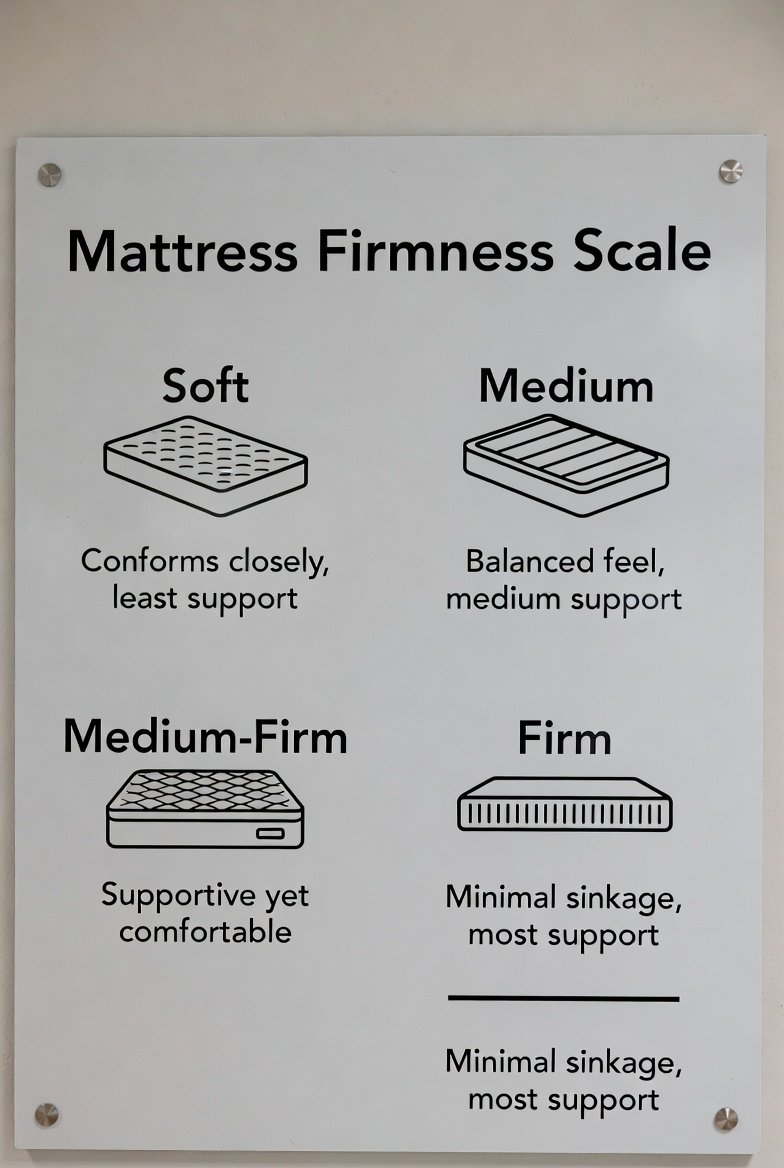
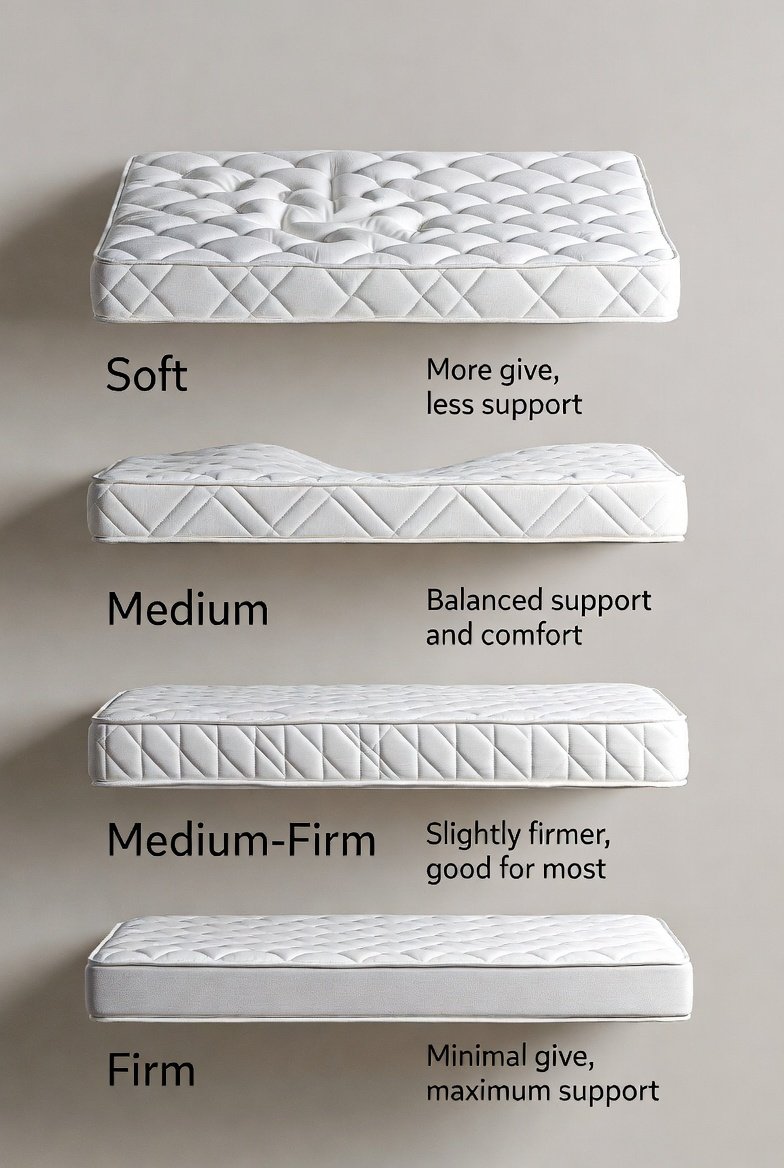
A simple firmness scale (what it usually means)
- Soft: best for lighter side sleepers who need more contouring
- Medium: works for many combo sleepers and average-weight side sleepers
- Medium-Firm: often best for back sleepers and couples
- Firm: often best for stomach sleepers and heavier bodies
If you’re buying for back comfort: the common “sweet spot” many guides reference for back pain is often medium-firm (around 6–7/10).
Step 4: Mattress Types Compared (What Actually Works for Most People)
Memory Foam
Pros
- Great pressure relief (shoulders/hips)
- Good motion isolation (partner movement)
Cons
- Can trap heat depending on foam density and design
- Some people dislike the “stuck-in” feel
Hybrid (Foam + Coils)
Pros
- Balanced comfort + support
- Better airflow than many all-foam beds
- Strong all-around starting point for mixed sleepers
Cons
- Quality varies a lot by coil system and foam thickness
Innerspring
Pros
- Bouncy and breathable
- Often lower cost
Cons
- Less pressure relief
- Can feel thin if comfort layers are minimal
Latex
Pros
- Responsive (less sink)
- Often sleeps cooler than dense foam
- Durable
Cons
- Usually higher upfront cost
Consumer Reports and other testing-focused outlets generally group mattresses into these types and emphasize matching feel/support and durability over brand marketing.
Safest all-around starting point: If you don’t know what you like yet, a hybrid is usually the most forgiving place to start.
Step 5: The Three “Invisible” Features You’ll Feel Every Night
These don’t sound exciting—until you live without them.
Cooling
If you sleep hot, prioritize:
- coil airflow (hybrids/innerspring)
- breathable covers
- avoid dense foam with no cooling design
Motion Isolation
If you share a bed:
- foam and many hybrids reduce partner disturbance
- traditional springs tend to transfer movement more
Edge Support
If you sit on the bed edge or sleep near it:
- reinforced edges make the bed feel larger
- weak edges shrink usable space and feel unstable
Step 6: Mattress Size Guide (Why Bigger Often Improves Sleep)
Crowded sleep causes micro-wakeups even if you don’t remember them.
Common mistakes:
- couples choosing Full instead of Queen
- tall sleepers ignoring mattress length
- two sleepers forcing one firmness when they have different needs
If your room allows it, sizing up is one of the fastest ways to improve comfort.
Step 7: Mattress Budget — What to Spend (Without Getting Played)
Price doesn’t automatically equal quality, but extremes are risky.
Practical budget ranges (rule-of-thumb)
- $600–$1,000: strongest value range for many online mattresses
- $1,000–$1,500: better materials, thicker comfort layers, often longer lifespan
- $1,500+: luxury feel, niche features, premium materials
Two smart warnings
- Ultra-cheap beds often lose support faster.
- Overpriced beds can include “branding premiums” that don’t improve sleep.
(Keep this framed as a rule-of-thumb, not a guarantee, because builds vary.)
Quick Decision Table (Use This Before You Shop)
Sleeper Type | Starting Firmness Range | Most Reliable Type | Notes |
Back sleepers | Medium → Medium-firm | Hybrid | Prioritize lumbar support + stable core |
Side sleepers | Medium-soft → Medium | Foam or Hybrid | Prioritize shoulder/hip pressure relief |
Stomach sleepers | Medium-firm → Firm | Hybrid | Keep hips from sinking; flatter feel |
Combination sleepers | Medium → Medium-firm | Hybrid | Responsive surface helps position changes |
Couples | Medium-firm | Hybrid | Balance motion isolation + support |
Hot sleepers | Medium → Medium-firm | Hybrid or Latex | Airflow + breathable materials matter |
Step 8: Trials, Returns, and Durability Signals (What to Look For)
A mattress should prove itself at home, not in a showroom.
Look for:
- 90–120 night trial (common in online mattress market)
- a clear return process (pickup vs box-it-yourself)
- warranty terms that actually mention sag/indentation thresholds
Simple durability signal: thicker comfort layers and quality support cores generally last longer than thin, budget builds—though no warranty can prevent natural wear.
Step 9: Online vs In-Store Buying (Which Is Better?)
Online
- better at-home testing
- often better pricing and clearer trials
In-store
- immediate feel testing
- but pressure selling is common, and “5 minutes in-store” doesn’t predict 30 nights at home
Some consumer advocates note that quick showroom testing is a weak predictor of long-term comfort, so the home trial matters more than hype.
Common Mattress Buying Mistakes (Avoid These)
- Choosing based on brand name first
- Ignoring your sleep position
- Buying too soft for your support needs
- Skipping the fine print on trials/returns
- Underestimating body-weight impact
Most mattress regret comes from these.
Limitations (Read This Before You Blame the Mattress)
A mattress can help comfort and alignment, but it can’t fix everything.
- If you have severe or worsening pain, numbness, or neurological symptoms, treat this as a medical issue—not a mattress issue.
- If your pillow is wrong for your posture, your neck can still suffer even with a great mattress.
- If you sleep 4–5 hours due to stress, caffeine, or screen habits, a perfect mattress won’t “solve” fatigue.
This guide is about choosing a better mattress—not diagnosing health conditions.
Final Takeaway
The best mattress is the one that:
- keeps your spine aligned
- relieves pressure points
- matches how you actually sleep
- stays stable over time
- comes with a real trial and return process
Use this mattress buying guide as your foundation—then compare specific models with confidence.
1-Line Decision Matrix:
Best overall starting point: Hybrid • Best for pressure relief: Memory foam • Best for hot sleepers: Latex/Hybrid with strong airflow