
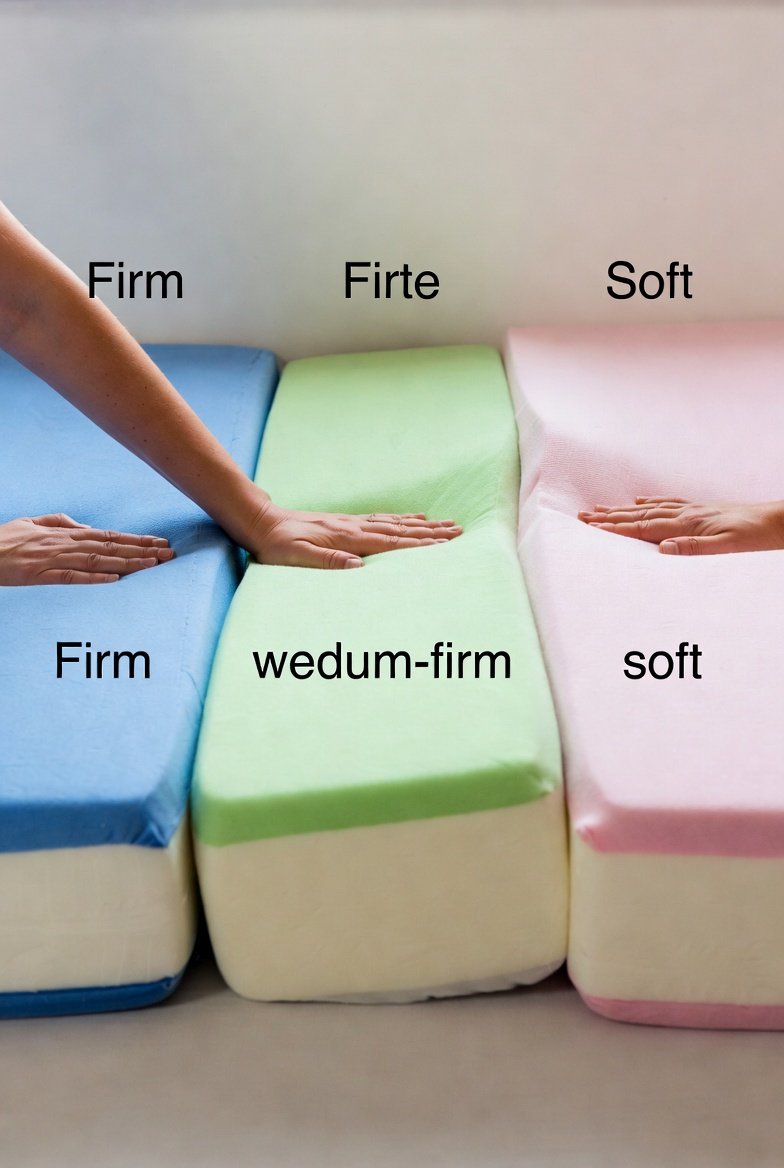
Firm Mattress: What It Is, Who It’s Best For, and When to Avoid It
A firm mattress gets recommended for “back support” all the time—usually as a one-line shortcut.
That shortcut is incomplete.
A firm mattress can feel incredible for the right sleeper: stable, flat, and supportive. But for the wrong sleeper, it can feel like sleeping on a clean slab—pressure pain at the shoulders/hips, stiffness in the morning, and worse sleep even if the bed “feels supportive.”
This guide breaks it down clearly: what a firm mattress is, who it’s best for, who should avoid it, and how body weight, sleep position, and materials change what “firm” actually feels like. Also: a quick test you can use to decide without guessing.
What Is a Firm Mattress?
A firm mattress is a bed with a flatter, more supportive surface and minimal sink. You sleep more on top of it than in it.
Typical traits:
- Minimal surface compression
- Strong pushback support
- Less contouring around shoulders/hips
- Stable, “level” sleeping feel
Important: Firmness describes feel, not build quality. You can buy a firm mattress that’s durable—or one that’s cheap and harsh.
Also, firmness labels aren’t standardized. One brand’s “medium” can be another brand’s “firm,” which is why you should treat labels as a starting point—not a promise.
How Firm Does a Firm Mattress Feel (Firm vs Extra-Firm)
Most firmness scales use 1–10, with higher numbers being firmer. Many guides place firm around 7–8, while extra-firm is closer to 9–10 (very rigid, minimal give).
Firm vs medium-firm vs extra-firm (in real life):
- Medium-firm: stable but still cushions pressure points
- Firm: noticeably less sink; pressure relief drops
- Extra-firm: very rigid; often too harsh for many sleepers
If you’ve ever laid on a “firm” bed and thought, “this is hard,” it may actually be extra-firm (or a firm innerspring with thin comfort layers).
The 60-Second Firm Mattress Fit Test (Do This Before You Commit)
Use this decision test after 3–7 nights, not 3 minutes in a showroom.
Firm is likely right if:
- You sleep mostly on your stomach
- You’re heavier than average (you sink deeper and need more resistance)
- You feel “stuck” in softer beds
- You want a flatter surface and don’t need much contouring
Firm is likely wrong if:
- You sleep mostly on your side
- You wake up with shoulder/hip pain, numbness, or tingling
- You’re lightweight (firm feels even firmer)
- You need obvious pressure relief to stay asleep
Stomach sleepers often prefer firmer mattresses because inadequate support can let the midsection sag, arching the lower back.
Who Benefits Most From a Firm Mattress?
1) Stomach Sleepers
Firmness helps prevent the hips from sinking and reduces the “lower-back arch” problem stomach sleepers often get on softer beds.
2) Heavier Sleepers
Heavier bodies compress layers more, so “medium” can feel soft. A firmer build can maintain alignment and resist bottoming out.
3) Some Back Sleepers Who Hate Sink
If you’re a back sleeper who wakes up feeling like your hips sank too much, firm can feel more stable. But many back sleepers do best with medium-firm, not max firm.
4) People Who Dislike the “Hug” Feel
If you hate deep contouring (common with some foams), firm surfaces feel easier to move on and less “grabby.”
Who Should Avoid a Firm Mattress?
1) Side Sleepers
Side sleeping concentrates load on the shoulder and hip. Firm surfaces can spike pressure points and cause numbness or joint pain.
2) Lightweight Sleepers
Firm feels firmer the lighter you are, because you don’t compress comfort layers enough to “activate” cushioning.
3) People With Shoulder/Hip Pain
A firm surface can aggravate pressure points. You usually want better pressure relief, not more hardness.
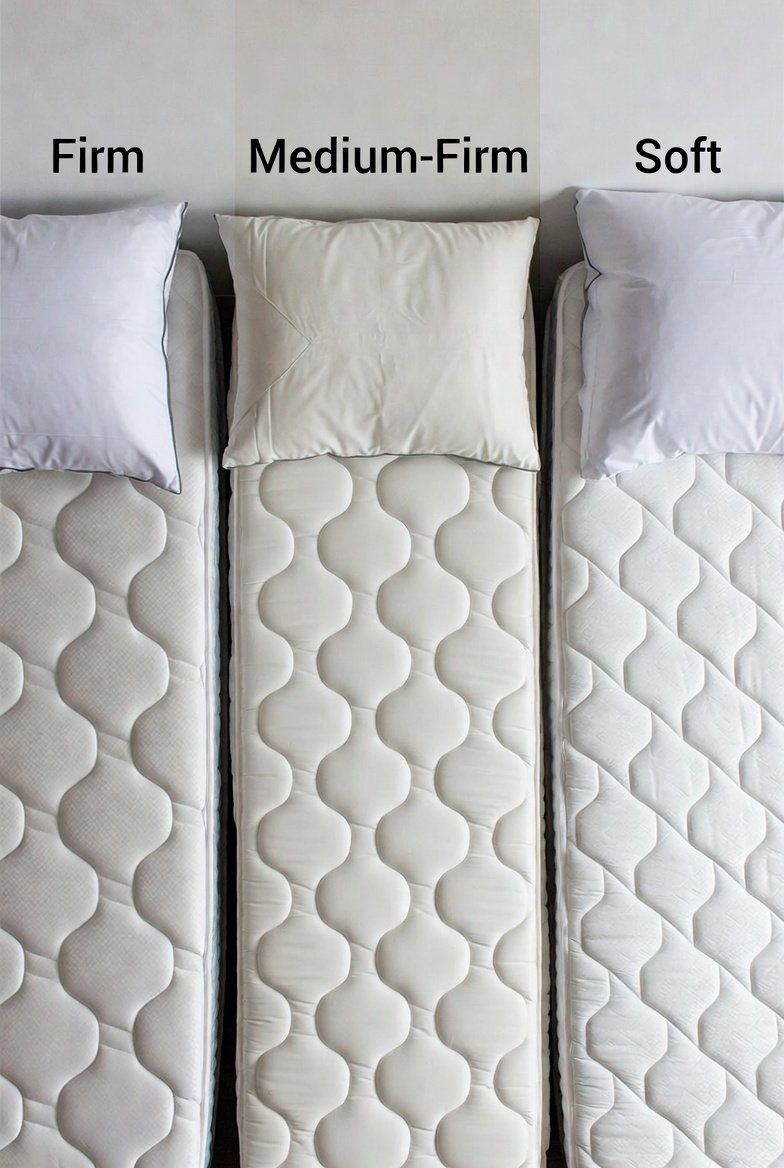
Firm vs Medium-Firm vs Soft (Quick Comparison)
Feature | Soft | Medium-Firm | Firm |
Sink | Deep | Moderate | Minimal |
Pressure relief | High | Balanced | Low |
Spinal alignment stability | Variable | High | High (for right body/position) |
Best for | Light side sleepers | Many back sleepers + couples | Stomach sleepers + heavier sleepers |
Consumer Reports also notes that firmness labeling varies by brand, so comparing by how it performs for your body matters more than the word on the tag.
Firm Mattress Decision Flow (Simple, No Drama)
Choose firm if:
- Stomach sleeper OR heavy body
- You feel lower-back strain on soft beds
- You prefer a flat, stable surface
Avoid firm if:
- Side sleeper
- Shoulder/hip pain or numbness
- Lightweight body
- You wake up sore even when you “slept enough”
If you’re split: medium-firm is usually the safer bridge for most people.
Does Mattress Material Change “Firm” Feel? Yes—A Lot
Two mattresses labeled “firm” can feel completely different.
Firm Memory Foam
- Still contours; “firm” can feel less rigid than spring beds
- Can soften with heat and time
Firm Hybrid
- Foam comfort + coil support
- Often the best balance of firmness + usability (most consistent “firm” feel)
Firm Innerspring
- Can feel very flat and rigid
- If comfort layers are thin, it can feel harsh
Firm Latex
- Firm but responsive (pushback rather than sink)
- Often durable and breathable
Firm Mattress, Pressure Relief, and Pain (The Part People Miss)
Firmness helps stability—but it reduces pressure relief.
- Too firm: shoulder/hip/joint pain, numbness
- Too soft: hips sink, lower-back tightness
- Right fit: neutral spine + enough cushioning for pressure points
For some low-back pain scenarios, evidence often favors medium-firm over very firm, because it balances support and comfort.
Can You Soften a Firm Mattress Without Ruining Support?
Sometimes. Here’s the safe ladder:
- Add a topper (2–3 inches) to increase pressure relief
- Choose a hybrid with a thin comfort layer (firmer core, softer surface)
- Use the break-in period (30–60 nights is common) before deciding
Truth: A topper can improve comfort, but it can’t fix a weak support core.
Trial Periods: The Smart Way to Decide
Mattress buying Guide If you’re unsure:
- Look for a trial window (many offer around 90–120 nights)
- Judge based on morning stiffness after 1–2 weeks, not day 1
- If offered, choose brands that allow firmness exchanges/swaps
How Long Do Firm Mattresses Last?
Firm mattresses often seem like they last longer because they compress less—but durability still depends on build quality.
In general:
- firm hybrids and latex tend to hold structure well
- thin comfort layers can break down faster (even on “firm” beds)
Final Verdict: Is a Firm Mattress Right for You?
A firm mattress is not a universal solution. It’s a fit.
Choose a firm mattress if you:
- sleep on your stomach
- are heavier and need stronger resistance
- prefer sleeping “on” the mattress
- feel stuck in softer beds
Avoid a firm mattress if you:
- sleep on your side
- need pressure relief
- are lightweight or have joint pain
Best balance for most people: medium-firm (especially couples and back sleepers).
1-Line Decision Matrix:
Best for stomach sleepers: Firm • Best all-around compromise: Medium-firm • Best for light side sleepers: Medium/medium-soft