
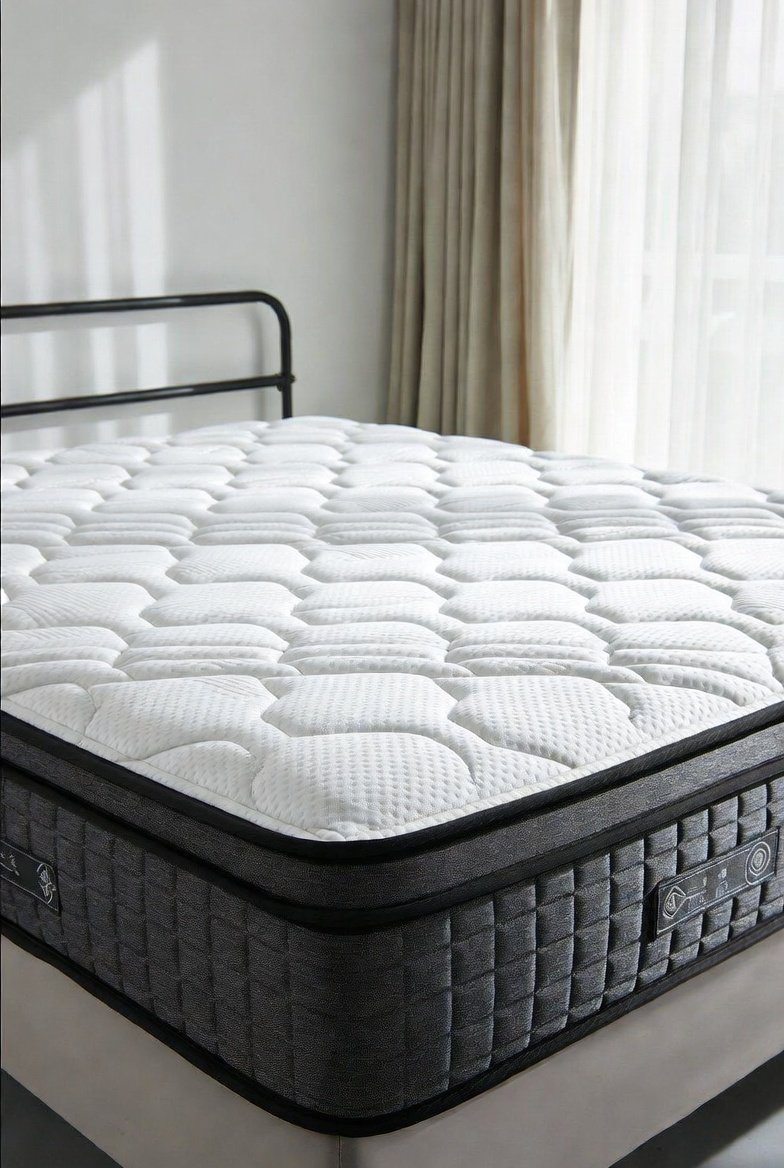
Best Mattress for Hip Pain: How to Reduce Pressure Without Losing Support
Hip pain at night is one of the fastest ways to destroy sleep quality. The frustrating part is that it’s easy to misread: some people assume hip pain means the mattress is too firm, while others are told “go firmer for support.” Both can be wrong—because hip pain is usually a fit problem, not a firmness slogan.
Most hip pain from sleep comes from one of two failures:
- Too much pressure on the hip joint (common on firm, flat surfaces)
- Poor alignment from hip sink (common on overly soft or worn-out beds)
The best mattress for hip pain does one job exceptionally well: it cushions the hip enough to reduce pressure while keeping your spine neutral so your hips don’t collapse. This guide shows you how to choose that balance based on sleep position, body weight, and mattress build—without wasting money on hype.
Why Hip Pain Happens on the Wrong Mattress
Your hips are one of the heaviest and widest points of the body. When you lie down, your hips naturally press deeper into the mattress than your shoulders or lower legs. If the mattress can’t handle that pressure intelligently, pain builds.
Hip pain usually comes from one of these three issues
- Excessive pressure at the hip (hip bone feels “bruised” or sore)
- Hip sink and spinal tilt (hips drop, spine twists, lower back joins the party)
- Poor material response (bed doesn’t adapt—either feels like a board or collapses)
If your mattress is too firm
- the hip joint presses into the surface
- pressure concentrates at one point
- blood flow can feel restricted
- you may roll repeatedly to escape discomfort
If your mattress is too soft
- hips sink too deeply
- spine curves unnaturally
- pelvis tilts
- you wake up stiff in the hip and sometimes the lower back
The goal is not maximum softness. The goal is pressure relief with alignment.
Hip Pain Fit Check (30 Seconds)
These quick signals help you figure out what’s happening without guessing.
Signs your mattress is too firm
- pain feels sharp or bruised at the outer hip
- you wake up and immediately want to shift positions
- your hip feels sore even though your back feels “supported”
- side sleeping feels like “hip on concrete”
Signs your mattress is too soft (or sagging)
- pain feels deep + achy, often paired with lower-back tightness
- you feel “stuck” in one position
- you notice a dip where your hips rest
- you wake up stiffer than when you went to bed
If you recognize one set strongly, your path is clear: either add pressure relief (too firm) or restore support (too soft).
Best Mattress Firmness for Hip Pain
For most people: medium to medium-firm
This range usually works because it:
- cushions the hip joint
- prevents deep hip sink
- maintains neutral alignment
- works for both side and back sleeping
When slightly softer can help
- lightweight side sleepers
- people who feel hip “pressure pain” on medium beds
- sleepers with very bony hips who need more cushioning
When slightly firmer can help
- heavier sleepers (who compress layers deeply)
- stomach sleepers with hip strain
- people whose hips sink and twist their spine on softer beds
Very firm mattresses often increase hip pressure. Very soft mattresses often increase misalignment.
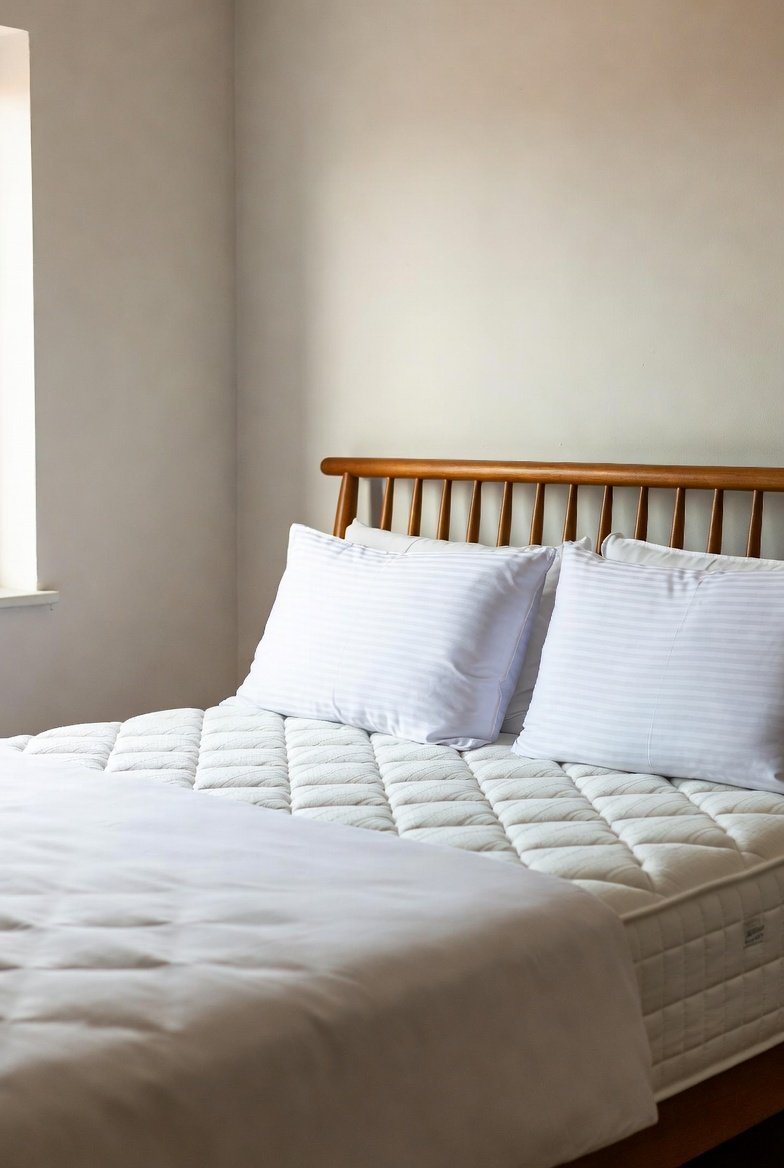
Best Mattress Types for Hip Pain
Hybrid mattress (best overall for most hip pain)
A hybrid often performs best because:
- foam comfort layers reduce hip pressure
- coils keep the pelvis supported
- the feel stays more stable over time than many all-foam budget beds
- airflow is better (less heat = less “sink” sensation for some sleepers)
Memory foam mattress (best for pressure relief if the support is right)
Foam can be excellent for hip pain if it:
- contours without creating a deep hip crater
- uses durable foam that won’t soften quickly
Avoid low-density foams that break down fast and create body impressions.
Latex mattress (best for “supported cushioning” without deep sink)
Latex tends to:
- cushion while pushing back
- keep hips elevated
- hold shape well long term
- sleep cooler than many foams
Innerspring mattress (least reliable for chronic hip pain)
Springs can feel supportive, but:
- pressure relief depends heavily on the comfort layers
- thin tops can feel harsh on hips
- some models allow “coil feel-through” at pressure points
For most sleepers: hybrid or quality foam/latex is the safest path.
Best Mattress for Hip Pain by Sleep Position
Side sleepers
Side sleeping creates the highest hip pressure.
You need:
- enough top-layer cushioning for the hip
- enough support so hips don’t sink and twist the spine
Best match: medium or medium-firm hybrid or adaptive foam
Common mistake: too-firm surface with thin comfort layers → hip pain worsens fast
Back sleepers
Back sleepers need stable pelvic support.
You need:
- hips supported without sinking
- gentle contouring so pressure doesn’t concentrate
Best match: medium-firm hybrid or latex
Common mistake: soft mattress that lets hips dip → lower back tightness + hip ache
Stomach sleepers
Stomach sleeping demands hip lift.
You need:
- firm, flat support
- minimal sink under the pelvis
Best match: medium-firm to firm hybrid or latex
Common mistake: plush mattress comfort layers → pelvis drops → hip + low-back strain
Best Mattress for Hip Pain by Body Weight
Body weight changes firmness feel dramatically.
Lightweight sleepers
- feel mattresses as firmer
- often need more cushioning for the hip
Best: medium or medium-soft comfort feel (with stable core)
Average-weight sleepers
- experience firmness as intended
Best: medium to medium-firm
Heavier sleepers
- compress layers deeper
- need stronger support to avoid hip sink
Best: firm-leaning medium-firm hybrid or latex
Ignoring body weight is one of the easiest ways to buy the wrong bed for hip pain.
Key Mattress Features That Help Hip Pain
Prioritize these
- Pressure-relieving comfort layers (foam or latex)
- Medium to medium-firm feel (for most people)
- Durable support core (coils or high-quality foam/latex)
- Strong center support (prevents pelvic dip)
- Zoned or adaptive support (helpful if built well)
Note: Marketing labels like “orthopedic” don’t mean anything unless the mattress actually has the support + comfort architecture to match.
What to Avoid (Hip Pain Red Flags)
Avoid mattresses with:
- thin comfort layers (hip pressure concentrates immediately)
- very firm, flat tops (common cause of hip “bruising” feel)
- very soft tops that allow deep hip sink
- low-density foams that soften quickly
- visible dips or hammock feel
- no real sleep trial
If your pain feels like it’s “right on the hip bone,” you typically need more pressure relief, not more firmness.
Hip Pain vs Lower-Back Pain: Quick Clarity
These are often confused, but the fix differs.
- Hip pain: localized discomfort at the outer hip or joint area
- Lower-back pain: central tightness, usually from hip sink and spinal curve
A too-firm mattress often triggers hip pressure pain.
A too-soft or sagging mattress often triggers lower-back strain (and then hip pain follows).
Correcting mattress fit often improves both.
Posture Helpers That Make a Big Difference
A mattress matters most—but posture choices can reduce hip stress.
For side sleepers: consider a knee pillow
A knee pillow can:
- reduce hip rotation
- reduce twisting through the pelvis
- keep the spine more neutral
Check your sleep posture
If your top knee falls forward aggressively, your hips rotate. Reducing rotation often reduces pain.
These aren’t magic fixes—but they prevent your mattress from fighting your posture all night.
At-Home Tests to Know if the Mattress Is the Problem
1) Hip pressure test
Lie on your side for 10 minutes.
If you feel a sharp pressure point building at the hip, your comfort layers are likely too thin or too firm.
2) Hip sink test
Lie on your back and place a flat hand under your lower back.
If you feel your pelvis sinking and your spine arching unnaturally, the mattress may be too soft (or worn).
3) Base stability test
A weak frame can mimic a soft mattress.
If the bed base flexes or wobbles, alignment suffers.
How Long It Takes to Feel Hip Pain Relief
Hip pain relief often takes time because pressure sensitivity adapts.
- 7–14 nights: initial adaptation
- 3–4 weeks: reduced pressure sensitivity for many people
- 30–60 nights: fair evaluation window
- 90 nights: ideal if you’re comparing firmness options
Persistent pain after a proper trial usually means the mattress isn’t the right match.
Trial Periods Matter More for Hip Pain
For hip pain, trials are non-negotiable.
Look for:
- 90–120 night trial
- easy returns or exchanges
- clear warranty details
- transparent firmness + materials
Avoid mattresses with short trials—hip pain doesn’t always show up on night one.
Quick Buyer Table: Best Mattress for Hip Pain
Sleeper Type | Best Firmness | Best Mattress Type |
Side sleeper | Medium | Hybrid / Foam |
Back sleeper | Medium-firm | Hybrid / Latex |
Stomach sleeper | Medium-firm | Hybrid / Latex |
Lightweight | Medium / Medium-soft feel | Foam / Hybrid |
Heavy | Firm-leaning medium-firm | Hybrid / Latex |
Final Verdict: What’s the Best Mattress for Hip Pain?
The best mattress for hip pain:
- relieves pressure at the hip joint
- keeps the spine neutral (no hip sink)
- matches sleep position and body weight
- uses durable materials that won’t collapse quickly
- comes with a real sleep trial
For most people, a medium to medium-firm hybrid is the safest and most consistent solution because it balances pressure relief with pelvic support.
Decision Matrix:
Best overall: medium to medium-firm hybrid • Best for pressure relief: adaptive foam (with strong support core) • Best for “supported cushioning” without sink: latex
For deeper comparison, review the Mattress Firmness Guide and Mattress Buying Guide before choosing a specific model.
FAQs
What mattress firmness is best for hip pain?
Medium to medium-firm works best for most people because it balances pressure relief and support.
Is a firm mattress bad for hip pain?
Often yes. Firm surfaces can increase hip pressure, especially for side sleepers.
Is memory foam good for hip pain?
Yes—if it’s medium-feel and supportive enough to prevent excessive sink.
Can a bad mattress cause hip pain?
Yes. Mattresses that are too firm, too soft, or sagging commonly trigger hip pain.
How long should I test a mattress for hip pain?
At least 30–60 nights, ideally with a 90+ night trial.